
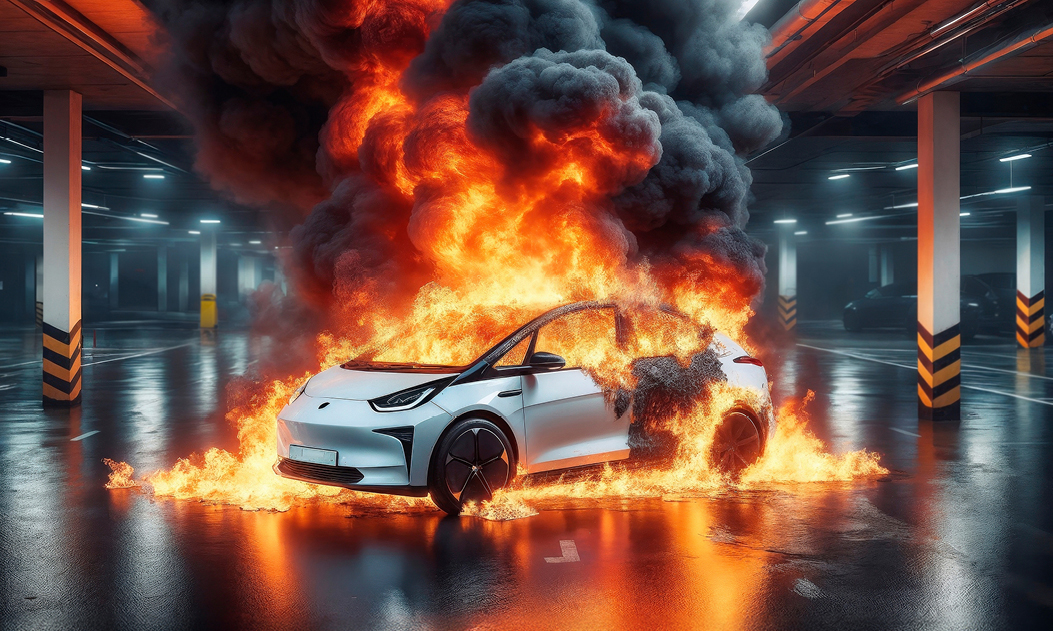
MODERN POWER SOURCE WITH HIDDEN RISKS
Lithium-ion batteries power nearly every part of today’s commercial environment — from hand tools and backup systems to electric vehicles (EVs) in parking garages and warehouse fleets. Their efficiency, power density, and rechargeability have made them indispensable.
But with those advantages come serious risks. Lithium-ion batteries represent an emerging fire, environmental, and safety challenge that can escalate quickly if mishandled. Recognizing and mitigating these risks is essential for protecting people, property, and operations.
We want to arm our clients and their teams with the knowledge of these hazards — and manage them safely, effectively, and in compliance with Environmental, Health, and Safety (EHS) best practices.
UNDERSTANDING THE RISK: WHY LITHIUM-ION BATTERIES ARE DIFFERENT
Unlike traditional batteries, lithium-ion units store large amounts of energy in compact cells. When punctured, overcharged, or exposed to heat, they can enter thermal runaway — a chain reaction that releases tremendous heat, ignites surrounding materials, and emits toxic gases.
Even a single damaged battery can reignite hours or days later. Fires involving lithium-ion batteries often leave behind hazardous residues and vapors that require specialized cleanup, not standard fire restoration techniques. In other words: traditional fire protocols are not enough. Managing these incidents demands chemical knowledge, containment planning, and environmental testing.
WHERE THE RISKS EXIST IN COMMERCIAL PROPERTIES
Lithium-ion batteries appear across nearly every commercial sector. Common high-risk locations include:
• EV parking garages and vehicle fleets
• Apartments, condos, and garages with e-bikes or scooters
• Maintenance facilities and tool storage rooms
• Warehouses, logistics centers, and scooter/bike fleets
• Data centers and facilities with UPS battery backup systems
Even small quantities of batteries can pose risk in enclosed or poorly ventilated spaces. After any fire or thermal event, air quality and contamination testing should be performed to ensure occupant safety and code compliance.
AFTER A FIRE: SAFE RESPONSE PROTOCOLS
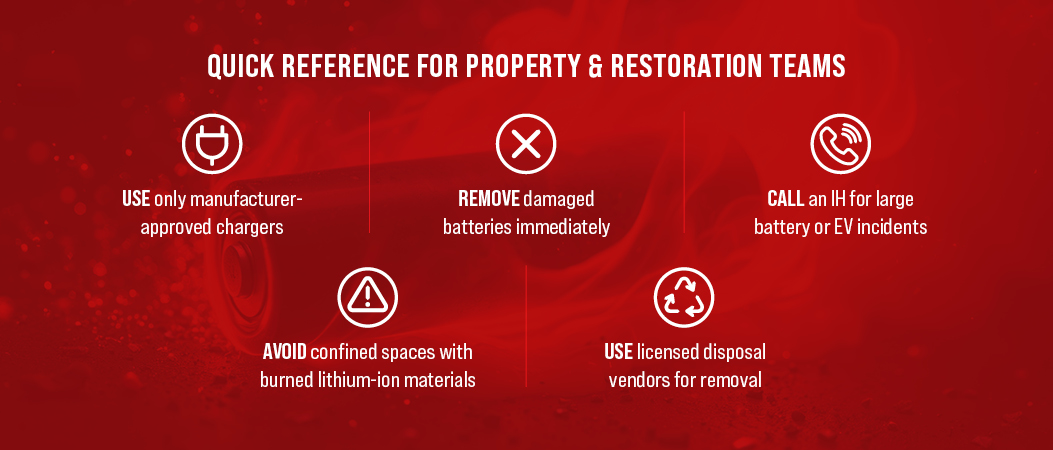
When lithium-ion batteries are involved in a fire, do not handle or disturb damaged units until an Industrial Hygienist (IH) has evaluated the site. The IH determines whether hazardous materials or off-gassing remain present.
An IH should always be called when:
• A large number of batteries are present
• An EV has burned inside a structure
• A fire occurred in a confined or poorly ventilated area
Damaged batteries must be removed immediately by qualified professionals — not standard debris crews — since re-ignition can occur at any time. Coordination between restoration contractors, property managers, and EHS teams ensures the cleanup is done safely and in compliance with OSHA and environmental standards.
FLOODED OR DAMAGED EVS
EVs present a special concern for property teams. Flooded or fire-exposed EVs can self-ignite even after appearing stable.
• Never attempt to power, move, or inspect an EV following a flood or fire.
• Only a dealer or certified towing company trained in lithium-ion safety should remove or handle these vehicles.
• If possible, isolate affected EVs outdoors and away from combustible materials until professional removal is complete.
JOBSITE CHARGING SAFETY: A PREVENTABLE RISK
Many lithium-ion fires begin not with a device failure, but with a charger. Aftermarket or unapproved chargers often lack proper overcharge protection, making them a leading cause of ignition.
To reduce risk on any commercial site:
• Use only manufacturer-approved chargers.
• Unplug chargers at the end of each shift.
• Supervisors should verify charging compliance daily.
These same precautions should extend to vendors and subcontractors operating on property — safety is only as strong as the weakest link on site.
DISPOSAL AND HAZARDOUS WASTE COMPLIANCE
Improper disposal of lithium-ion batteries can trigger fires long after they leave a facility. They should never be placed in standard trash, dumpsters, or municipal recycling bins.
• Small quantities: Use retailer-run recycling programs (many home improvement stores accept them).
• Large or bulk quantities: Contract a licensed hazardous waste disposal company with lithium-ion handling credentials.
Certified disposal partners can neutralize, transport, and document removal — protecting property managers from liability and ensuring regulatory compliance.
PROTECTING PEOPLE, PROPERTY, AND COMPLIANCE
At Signal, safety is a measurable performance standard. Our EHS program guides every decision on every site.
Signal’s Safety Record
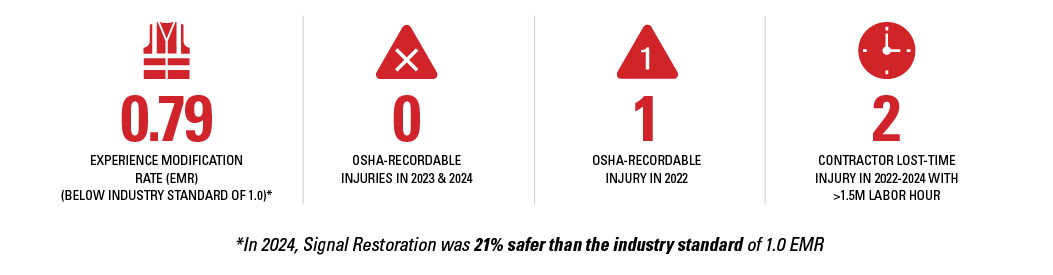
These results reflect our commitment to safe, efficient, and compliant operations — whether restoring high-rise properties, hospitality assets, single units, or complex industrial facilities.
Every incident involving lithium-ion batteries presents both immediate and long-term risks. Signal’s teams bring the expertise, equipment, and discipline to manage those risks — protecting people, property, and the future of your business.
Learn more about Signal’s safety-first approach and environmental health standards.