

When you think about preparing your facility for a potential loss, major disasters probably come to mind first. Hurricanes. Floods. Fires. Tornadoes. The kinds of events that can cause widespread damage in a matter of minutes.
But a major restoration project doesn’t always begin with a major disaster.
Sometimes, it starts with a burst pipe over the weekend. A roof leak that goes unnoticed overnight. A failed water heater. A piece of equipment that malfunctions at exactly the wrong time.
These incidents may be relatively small in scale, but depending on where and when they happen — and how prepared your organization is to respond — the disruption can be anything but small.
That’s why pre-loss planning isn’t only about preparing for the worst-case scenario. It’s about being ready for the everyday events that have the potential to become something much bigger.
NOT EVERY MAJOR LOSS STARTS WITH A MAJOR EVENT
A hurricane gives you time to watch the forecast. A severe storm may come with days of advance warning.
A pipe doesn’t.
Many building-related incidents happen without warning, and often when fewer people are around to notice them. A leak that might be quickly identified during normal business hours could continue for hours if it begins overnight, on a weekend, or during a holiday.
By the time someone discovers it, water may have traveled well beyond the source — affecting walls, flooring, equipment, inventory, or occupied spaces.
The initial problem may have been relatively straightforward. The resulting restoration project may not be.
WHY SMALL INCIDENTS CAN BECOME BIG PROBLEMS
The severity of a loss isn’t determined by the initial event alone. How quickly an organization can identify the problem and take action can have a significant impact on what happens next.
Consider a burst pipe.
Does someone know where the appropriate water shutoff is located? Can they access it? Who has the authority to make decisions after hours? Who should be called first? How will a restoration team gain access to the property if the facility is closed?
When those answers aren’t readily available, valuable time can be spent figuring them out while damage continues.
The same applies to other seemingly routine building incidents. A roof leak can travel through multiple floors before becoming visible. An equipment failure can affect surrounding systems. A water heater failure can send water into adjacent rooms and spaces.
Individually, these may not sound like disasters. But without a clear response plan, relatively small incidents can quickly become much larger restoration challenges.
THE OPERATIONAL IMPACT MATTERS, TOO
Property damage is only one part of a commercial loss.
What happens to the business while restoration is underway can be just as important.
A relatively contained water loss in an office hallway may cause an inconvenience. That same amount of water entering a server room, production area, patient care space or other business-critical area could have a much greater operational impact.
Employees may need to relocate. Production may slow or stop. Customers or tenants may be affected. Access to parts of the building may need to be restricted. Critical equipment or inventory may need immediate attention.
In other words, the physical size of a loss doesn’t necessarily reflect the size of its impact on your organization.
That makes knowing what needs to happen first especially important.
PREPARATION CHANGES THE RESPONSE
When an incident occurs, there will always be decisions to make. Pre-loss planning helps ensure your team isn’t starting from scratch.
A pre-loss assessment can help document critical information before it’s needed, including:
- Emergency contacts and decision-makers
- Utility and water shutoff locations
- Building access information
- Critical equipment and operations
- Areas that should receive priority attention
- Important vendors and facility contacts
- Site-specific safety considerations
Having that information readily available can help your team and restoration partner move more quickly from “What do we do?” to “Here’s what we need to do next.”
It also gives your restoration partner an opportunity to become familiar with your facility before an emergency occurs — rather than learning about it for the first time during one.
THE RIGHT PARTNER IS PART OF THE PLAN
A pre-loss plan is only as effective as the response it helps set in motion. Having the right restoration partner in place before an incident occurs means your team already knows who to call — and your restoration partner has the information needed to get to work quickly.
But speed isn’t the only consideration. The right partner should understand how to work safely within your environment, coordinate with your team and other stakeholders, and help protect both people and operations throughout the restoration process.
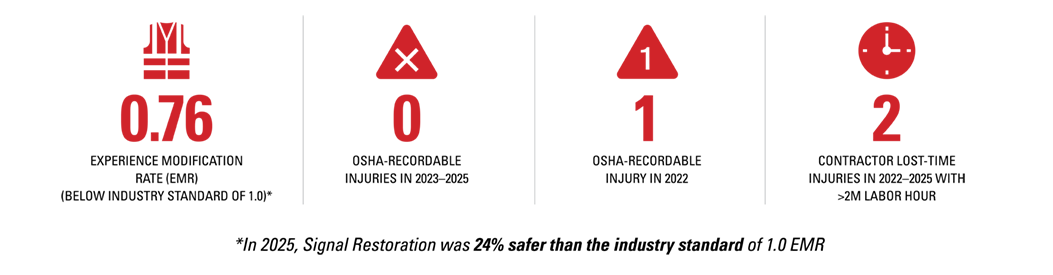
That makes choosing a restoration partner an important part of preparedness. Experience, communication, safety performance and the ability to respond at scale can all make a difference when an unexpected loss occurs.
PLAN FOR THE UNEXPECTED — WHATEVER ITS SIZE
Pre-loss planning isn’t about assuming disaster is around the corner. And it isn’t just for preparing for hurricanes, wildfires or other large-scale events.
It’s about recognizing that everyday building problems happen — and being prepared to keep a manageable incident from becoming a major disruption.
The size of the event isn’t what determines whether you need a plan.
Being ready before it happens is what matters.
Signal Restoration can help you identify risks, document critical facility information and develop a pre-loss plan designed to support a faster, more coordinated response when the unexpected happens.
Prepare before you need to respond. Contact us at 800.533.9898 or fill out our OnCall form to learn more about a pre-loss assessment.